What Types of Pearls Does Pearls Lover Offer?
Pearls Lover offers a wide selection of freshwater, Akoya, Tahitian, and South Sea cultured pearls.
Freshwater Pearls: Freshwater cultured pearls are grown in freshwater mussels. Many are cultured using mantle tissue, while some varieties are bead-nucleated. Freshwater pearls are generally more affordable than comparable saltwater pearls.
Akoya Pearls: Akoya pearls are saltwater cultured pearls produced by Akoya pearl oysters. They are typically cultured using a bead nucleus together with a small piece of mantle tissue. Akoya pearls are prized for their generally round shapes and bright, reflective luster.
South Sea Pearls: South Sea pearls are prized for their large size, beautiful luster, and body colors ranging from white and silver to cream and gold. They are cultivated in regions including Australia, Indonesia, and the Philippines.
Tahitian Pearls: Tahitian pearls are cultivated in French Polynesia, including islands and atolls beyond Tahiti itself. They are known for their naturally dark body colors and varied overtones. Peacock overtones are particularly sought after, although a pearl's value depends on its overall quality.
How Cultured Pearls Are Formed
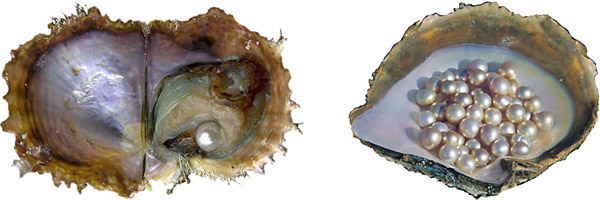
Most pearls used in jewelry today are cultured pearls. Cultured pearls are real pearls formed by living mollusks with assistance from pearl farmers; they are not imitation pearls.
A trained technician introduces mantle tissue, sometimes together with a bead nucleus, into a mollusk. The mollusk then deposits nacre around the nucleus or within the pearl sac, gradually forming a pearl.
Cultivation time varies according to the pearl type, growing conditions, and desired quality. It can range from months to several years.
How Does Pearls Lover Evaluate Pearl Quality?
We consider five main characteristics:
- Luster
- Shape
- Color
- Surface
- Size
Luster & Pearl Grading
Luster describes the brightness and sharpness of the reflections on a pearl's surface.
Pearls Lover uses letter grades to help describe pearl quality. Pearl grading is not governed by one universal standard, and grades may differ between sellers and pearl types. Please review each product's description and photographs alongside its stated grade.
AAA: Pearls with exceptional luster and a very clean, smooth-looking surface with minimal visible natural surface characteristics.
AA: Pearls with very high luster and some visible natural surface characteristics.
A: Pearls with lower luster and/or more noticeable natural surface characteristics.

Shape
Pearls Lover offers pearls in a variety of shapes, including baroque, button, near-round, and round.
Baroque: Pearls with irregular shapes. Their distinctive forms can make them especially appealing. Value depends on pearl type, luster, surface quality, size, and other characteristics.
Button: Pearls with a rounded face and a flattened profile. They are often used in earrings and other jewelry settings.
Near-Round: Pearls that appear mostly round but have slight variations in symmetry.
Round: Pearls with a spherical shape and a high degree of symmetry.

Color
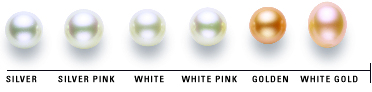
Pearls Lover offers pearls in a wide variety of colors. Pearl color includes the main body color and any overtones visible on the surface.
Pearls occur in many natural colors and shades. Some pearls are treated to change or enhance their color. Please refer to individual product descriptions for color information.
Surface
As a mollusk forms a pearl, the layers of nacre do not always develop evenly. Natural surface characteristics may include small spots, pits, ridges, or other variations.
Pearls with cleaner, smoother surfaces are generally more highly valued when other quality factors are comparable. Pearls Lover offers a range of surface qualities and prices.

Size
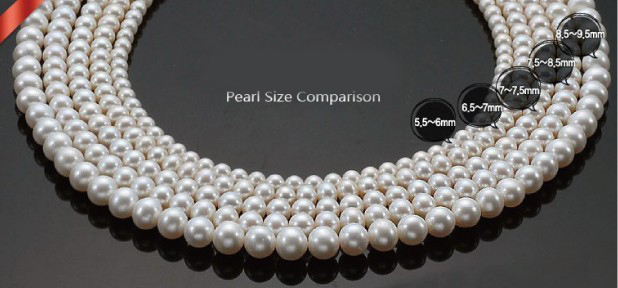
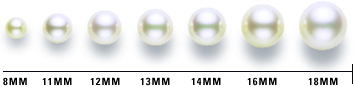
Pearl size is measured in millimeters. Larger pearls are generally more valuable when other quality factors are comparable. Size is influenced by the mollusk species, cultivation method, nucleus, and growing conditions.
Pearls Lover offers a variety of pearl sizes. Please refer to each product page for the available sizes and prices. The following are examples of size ranges; pearls outside these ranges also exist:
- Freshwater pearls: approximately 5–12 mm
- Akoya pearls: approximately 6–9.5 mm
- Tahitian pearls: approximately 8–18 mm
- South Sea pearls: approximately 9–18 mm
Pearl Necklace Styles
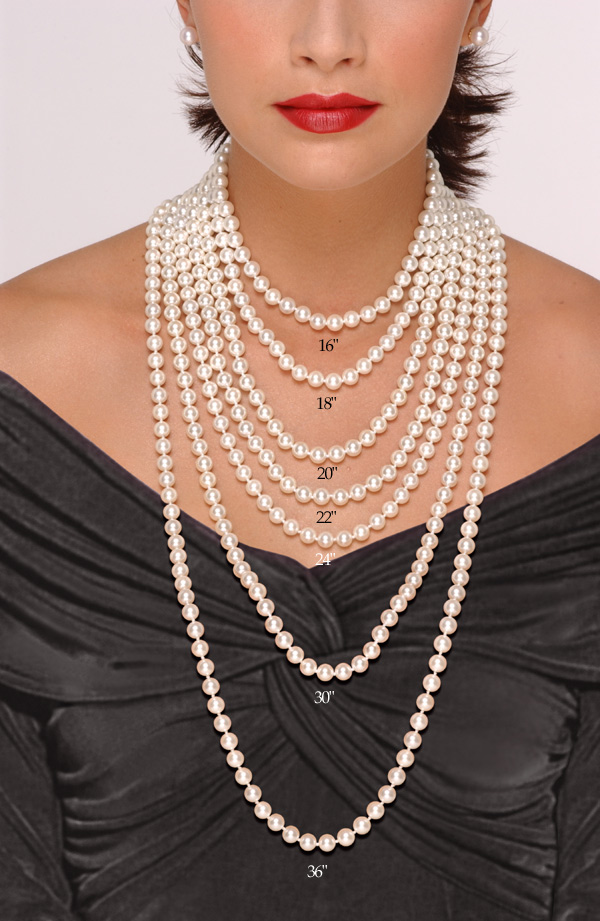
Necklace lengths are approximate. The position of a necklace when worn varies according to neck size and body proportions.
Collar — 12–13 inches: Fits closely around the neck and may consist of multiple strands.
Choker — 15–16 inches: Sits near the base of the neck.
Princess — 18–19 inches: Typically falls near or just below the collarbone.
Matinee — 20–24 inches: Typically falls on the upper chest.
Opera — 28–36 inches: Creates a longer drape and may be worn as a single strand or doubled, depending on its length.
Rope — 40 inches and longer: Extends beyond opera length and can be styled in several ways.